
Project Initiation
During my internship at BetterStreet, I had the privilege of collaborating with Father Toby Collins, CR, from St. Mary's Church. Father Toby, one of the founders of A Better Tent City in Kitchener, approached me after seeing my introduction to the BetterStreet team. He expressed interest in potentially partnering to work on interior design projects, particularly for a new type of sleeping cabin (8 by 10 ft).
Objective
The project objective is to create 3D designs for 8 by 10-foot sleep cabins, customized for unhoused individuals. These designs will prioritize functionality, considering their unique living styles and needs. Furthermore, the cabins will offer ample storage options while maintaining an aesthetically pleasing environment. Ultimately, the goal is to craft inviting and comfortable spaces that enhance the overall well-being of the occupants.
3D Design Process
Empathize
At the inception of the design process, I visited A Better Tent City in Kitchener with Father Toby to engage with unhoused individuals and understand their living conditions. Conversations with them revealed their styles, needs, and preferences for their living spaces. These insights guided the design and decoration of cabin sleep for unhoused individuals, aiming to meet their requirements and enhance their sense of dignity and comfort.
Design Strategies
After I visited A Better Tent City, I developed the key design strategies for creating functional and comfortable living spaces within the sleep cabins.
Storage Solutions
01
Develop innovative storage solutions to address limited space, prioritizing accessibility and organization.
02
Lighting Optimization
Optimize lighting conditions for visibility, safety, and comfort, blending natural and artificial lighting.
03
Stakeholder Engagement
Involve residents, staff, and stakeholders in the design process to ensure collaboration and engagement.
Site Visit
During my site visit to St. Mary's Church, I conducted an assessment of the space designated for the sleep cabins. I measured the dimensions and took photographs to aid in creating a 3D design for the interior. This visit allowed me to gain a comprehensive understanding of the layout and structural considerations, enabling me to develop a design that maximizes the available space while meeting the specific needs of the unhoused individuals who will inhabit the cabins.


Design
After taking measurements, I proceeded to design the 3D model, considering the following steps:
Low-Cost
Utilize low-cost and self-build furniture options.
Materials
Use durable materials such as vinyl flooring, solid wood walls, and steel doors.
Lighting
Incorporate downlights for adequate lighting.
Furniture
Select durable furniture such as L-shaped cabinetry, built-in shelves, wall-mounted TVs, bunk beds or loft beds, and foldable chairs and tables.
The following section contains the photos of the 3D design
African 3D Design
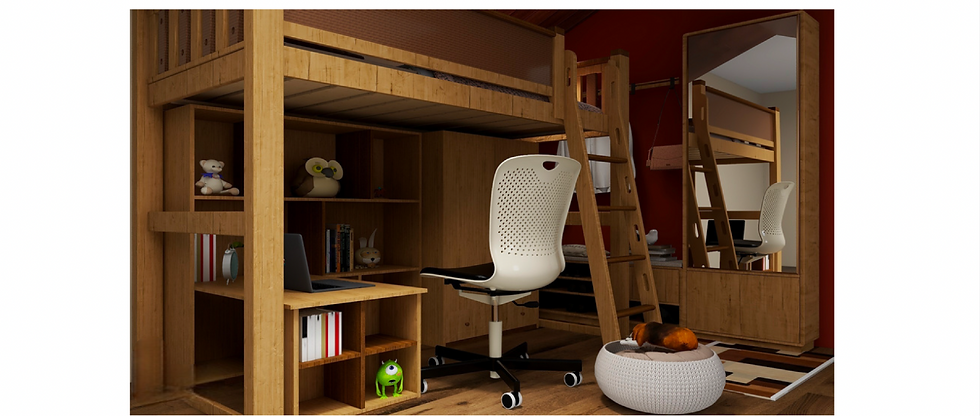


Contemporary 3D Design


Present
At the conclusion, I presented the proposed 3D design to Father Toby, who expressed great satisfaction with the outcome. He complimented the design, stating, "These plans really max out the space, and I love the colour palette you've chosen. Beautiful work!"